By Saturday we had begun to settle into a morning routine: wakeup call, hotel buffet breakfast, meeting in the lobby (undoubtedly to forget an item or two). This morning we strolled over to the laundromat across the street for a much needed wardrobe refresh before heading out for the day. Then we trecked through the rainy streets of Buenos Aires to the historic Café Tortoni. The coffeehouse was first opened in Paris but relocated to Buenos Aires before the First World War. On entering the ornately decorated cafe, we were greeted by an enthusiastic waiter who was eager to show us photos of the notable people who had visited the cafe, including Pope Francis and Hillary Clinton. After ordering coffee, tea, and pastries, we headed towards the back of the cafe where Sofia and Olivia serenaded us with piano and song in the same room famous for its tango shows. We took the long route back home, braving the muddy streets to see the Congress building and snapping a photo against the rain and wind.
Warm empanadas awaited us when we arrived back at the hotel, which we enjoyed during our writing workshop. The workshop was facilitated by Andrea Franco, a Cuban-Argentine writer. We began by pairing up and discussing different parts of our identities, which we then shared with the group. Then we each wrote our own poems (en Español, por su puesto) about our culture or community and arranged the words in a shape related to the topic. The rest of the workshop was spent reading notable poetry in Spanish about the authors' various cultures. We talked how the poets used language to bring their cultures to life as well as discuss difficulties that they've faced because of their identities.
Following the workshop, we made our way over to a breath-taking bookstore called El Ateneo Grand Splendid, a former opera house with five stories. The basement floor was filled with vinyls and CDs of every type of music: multiple rows of tango albums, jazz, and modern pop. The other floors housed books written in Spanish, which some of us bought. While browsing the shelves of the bookstore, we met a group of sociable Argentinian teens. They excitedly recommended a multitude of foods and desserts unique to Argentina and ardently described the difference between dulce de leche and caramel when a few of us made the mistake of saying the two sweets tasted the same. We were impressed by their English and their accents – two of them learned from a British teacher and three had lived in the US for a few years. After exchanging contact information, we parted ways and headed to a mall for dinner.
Upon receiving our "stipends" for dinner, we split ways at the food court. The two of us ordered Japanese cuisine and then joined the others at a table nearby. After we finished, we explored the mall for a little while before heading out. After the stuffy mall, the crisp air was refreshing, and it was nice to see the city lit up at night on our stroll back to the hotel. We passed by local shops, kiosks, and pharmacies, now familiar to us from our daily walks around our neighborhood, Micro Centro. Our chatters filled the late-night sidewalks (maybe a little too loudly) as we reflected on the day's events. We cannot wait for the next days to come as we further explore the city and become porteños ourselves!!!
Written by Danica and Anya.


.jpeg)

Taller de Poesia

Profe. Andrea Franco

...in which Sofia plays Liszt.
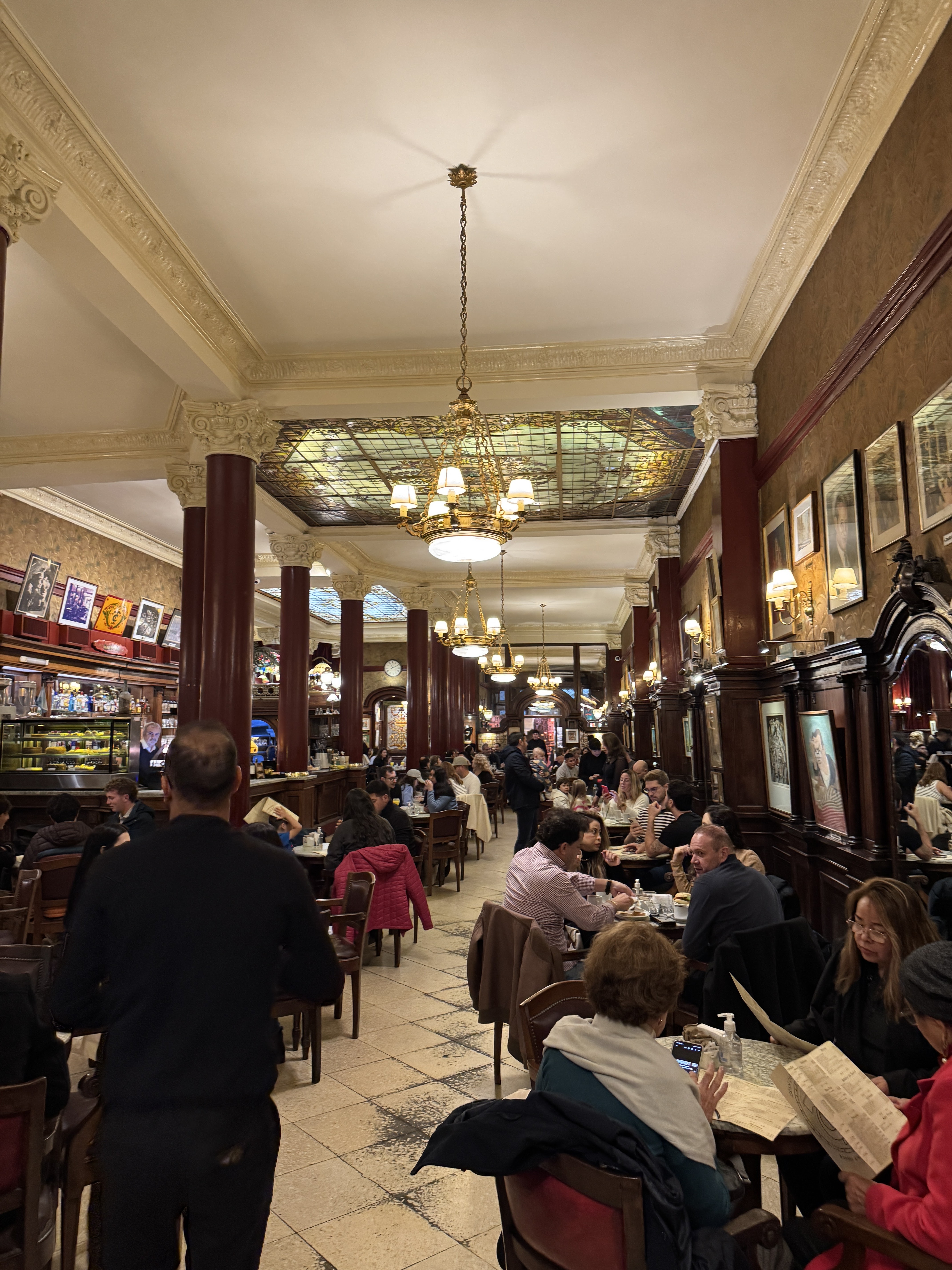
Café Tortoni

Congreso Nacional

Avenida de Mayo

El Gran Ateneo


The Juniors + Santi
.jpeg)
Avenida Pres. Roque Peña
Comments