Tuesday, our last full day in Buenos Aires, was as packed as every other. After breakfast at the hotel buffet, we took the bus over to Palermo, where we embarked on a tour of street art and murals. We talked about the importance of street art to the culture of Buenos Aires, visiting murals ranging in subject from Frida Khalo to the LGBTQ community to soccer. It amazed us to see murals in many parts of the city, each symbolizing something different. Many of the murals wowed us with their intertwinement of 2D art with 3D art, incorporating aspects of the building’s architecture into the paintings.
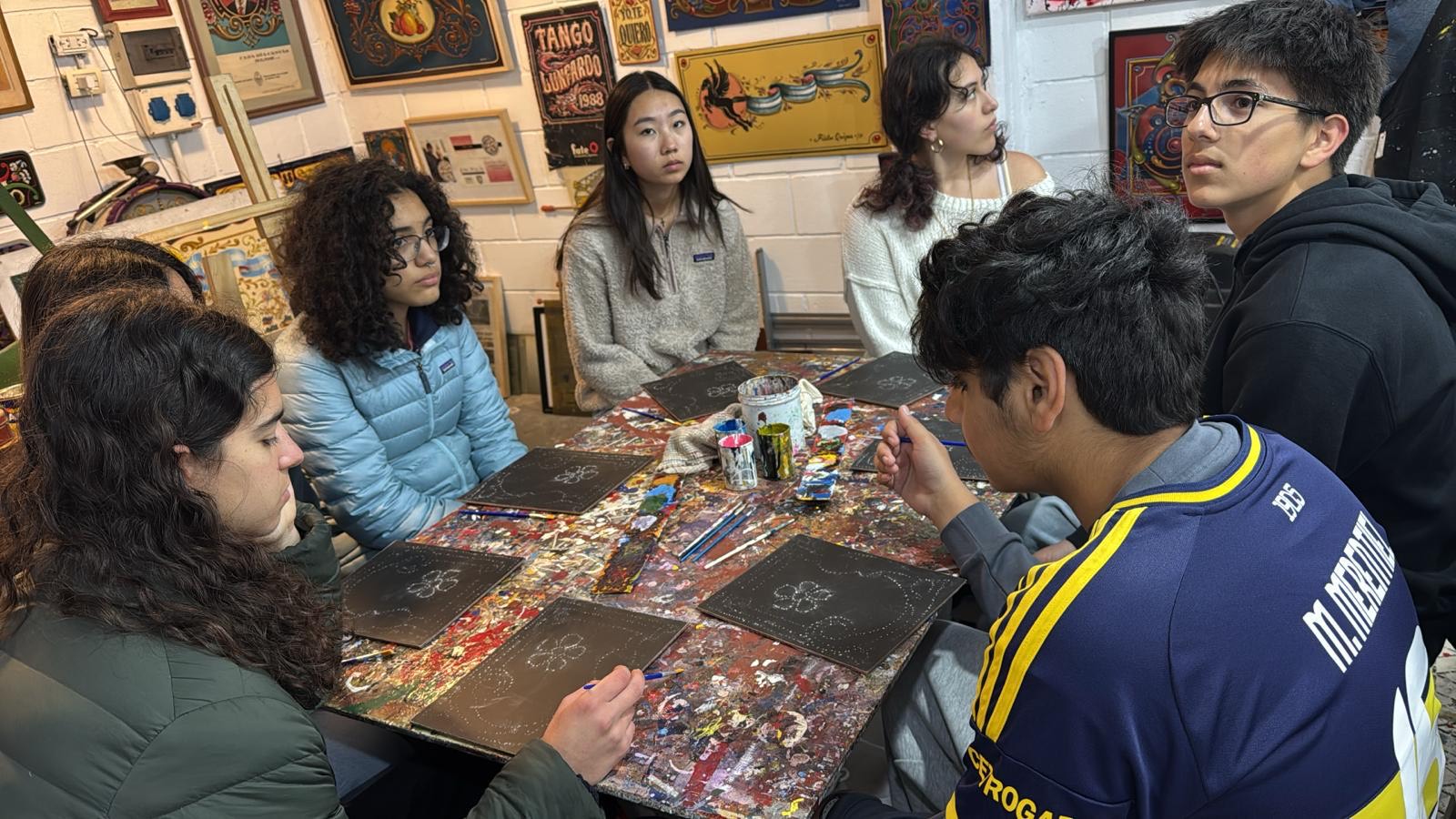
After the mural tour, we headed to another graffiti workshop, where we learned to paint a distinctive form of art central to Argentine culture. This style of art, called Fileteado, incorporates colorful components like borders to decorate parts of the city, including buses, signs, taxis, and trucks. At first, we attempted to mimic our maestro’s masterful paint strokes, but eventually diverged into our own styles of art, creating different artworks that we got to take home.


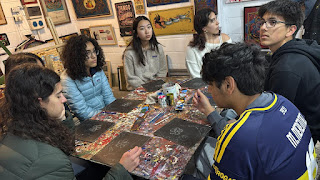


After the mural tour, we headed to another graffiti workshop, where we learned to paint a distinctive form of art central to Argentine culture. This style of art, called Fileteado, incorporates colorful components like borders to decorate parts of the city, including buses, signs, taxis, and trucks. At first, we attempted to mimic our maestro’s masterful paint strokes, but eventually diverged into our own styles of art, creating different artworks that we got to take home.

Palermo Graffiti Tour

El Goat

Novices No Longer
Hmmmmm

Taller de Fileteado
After a fun and messy art workshop, we walked across the street to another Argentinian restaurant for lunch. There we had a hearty meal of milanesas, tortilla espańola, and ravioli as we chatted boisterously about the week, cracking inside jokes we had accumulated along the way. As at every restaurant a few of us got limonada, a refreshingly sour and cucumber-y drink that’s undoubtedly good and perhaps even better than it is in the States.

At this point, we were milanesa connoisseurs.

Another One
After lunch, we maneuvered our way through public transportation to get back to the hotel, where we had a little down time to start packing since we were to leave the next day. Then we began a screening of Maria Presente, a film on the 19th century Black revolutionary María Remedios del Valle, known as “Madre de la Patria.” The film was directed by Julia Cohen Ribeiro, a tour guide with the travel agency we used, and other Afro-Argentine activists at El Tambo Afro. The film used a mix of narrative animation about María’s life and documentary-style interviews with Afro-Argentines to discuss the importance of the figure for Argentina and the reasons why she is often erased from its history. After the film, we had the opportunity to discuss its themes and creation with Julia herself.

"Madre de la Patria"
Then we used the short time before dinner to head over to a small general store, where we tried to use up the rest of our Argentinian pesos before we left. We stocked up on snacks for that night and for the plane ride the next day before rushing back to be on time for our dinner reservations. Per Nico’s original request, for dinner we returned to the restaurant we had gone to on the first night. We devoured steaks, provoleta, and huge brownies for dessert at what had to be the liveliest dinner of the trip. We discussed the highlights of the trip, Edge asked the waitress for her instagram, and Akhil’s provoleta was so tough that it bent his fork. Satisfied with our dinner, we returned back to the hotel, where, much to the Profes’ chagrin, we stayed up a bit past our bedtimes to celebrate our last night in Buenos Aires.
Written by Anya, Danica, and Abby.


Comments